
Vulnerability management is a fundamental pillar for the survival of any business, especially in 2025. With over 52,000 new CVEs (Common Vulnerabilities and Exposures) detected by the end of 2024, these cyber threats have increased by 520% since 2016. This is why, from the business environment, it is vital to adopt a proactive approach to defend against its devastating consequences.
With over 100 new CVEs detected daily and with 20% of security breaches resulting from already known vulnerabilities, the situation is becoming critical. But… What is your business doing to prevent these risks? To provide a clearer picture of the current cybersecurity landscape, this article presents the main vulnerability management statistics for 2025. Whether you are a business owner, an IT professional, or a CISO, you will need to consider this data to protect your digital assets.
Key Vulnerability Management Statistics (2025)
- A total of 52,000 new vulnerabilities were detected in 2024. (Statista)
- The number of CVEs has increased by 560% since 2016. (YesWeHack)
- 20% of security breaches are due to known vulnerabilities. (Verizon)
- Only 54% of critical vulnerabilities detected in 2024 were resolved throughout the year. (Verizon)
- Only 7% of SMEs consider their cybersecurity budget sufficient. (Crowdstrike)
- Adopting a vulnerability management solution yields a 600% ROI. (CrowdStrike)
- 90% of companies plan to invest in vulnerability management. (Greenbone)
General statistics of the vulnerability management market
The sharp increase in CVEs is accompanied by a sustained growth of the global vulnerability management industry. Below are the most relevant statistics regarding the evolution of this market, given its crucial role in the digital security of companies.
The vulnerability management market is valued at 17.24 trillion USD
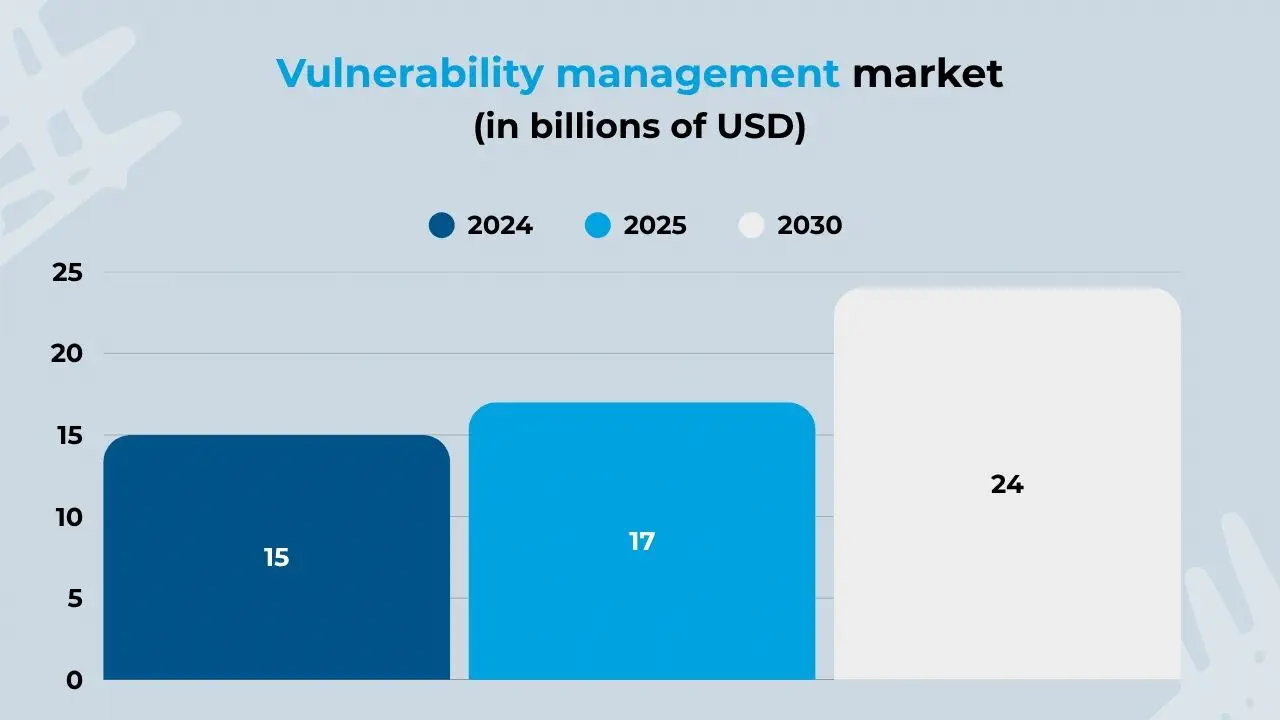
The vulnerability management market is growing at a tremendous pace. This is demonstrated by a recent report from ResearchAndMarkets, which shows that the value was $ 14.94 trillion in 2024 and is expected to reach $ 24.08 trillion by 2030. This translates into a compound annual growth rate (CAGR) of 8%.
These data align with a study conducted by Mordor Intelligence, which estimates that the vulnerability management market will reach $ 17.24 trillion by the end of 2025 and will reach $ 23.5 billion by 2030. In this case, a 7.5% CAGR growth rate is calculated.
Tenable, Qualys, and Rapid7 control more than 60% of the vulnerability management market
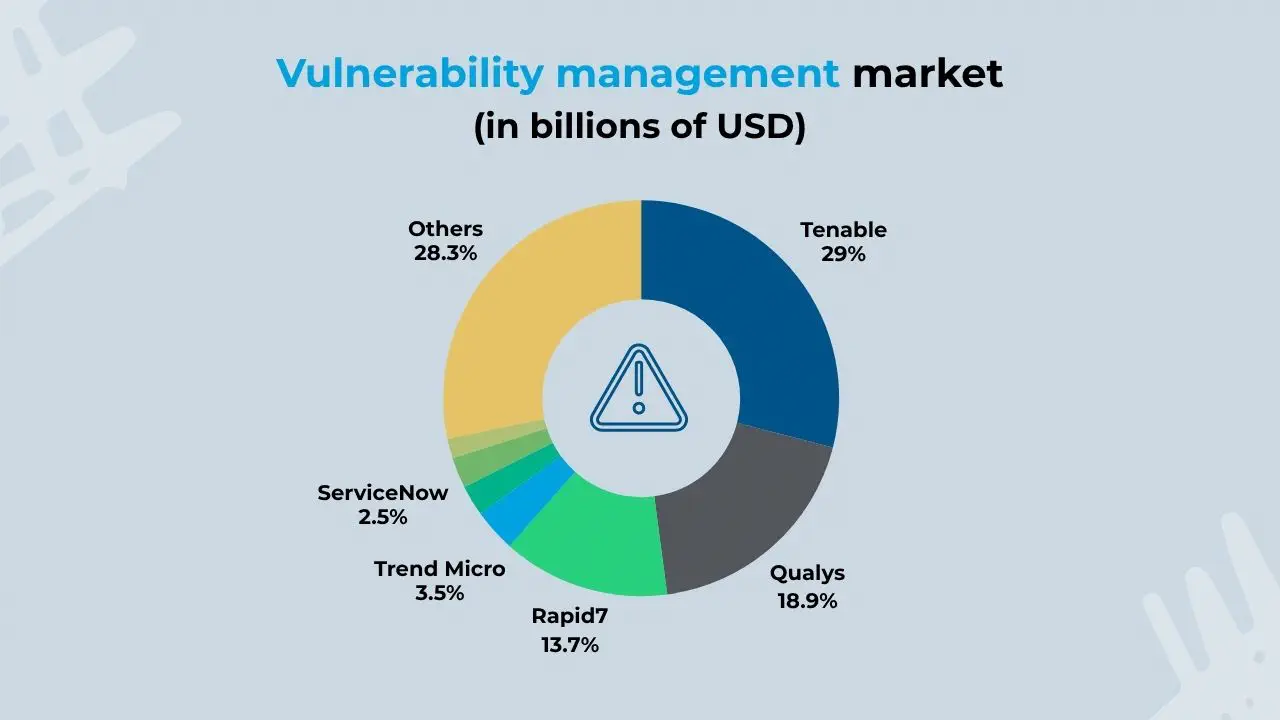
As stated in the IDC report, Worldwide Device Vulnerability Management Market Shares, there are three key players in the vulnerability management market: Tenable, Qualys, and Rapid7. In fact, the three together account for 61.6% of the sector.
Next, we detail the results of this study:
- Tenable: 29%
- Qualys: 18.9%
- Rapid7: 13.7%
- Trend Micro: 3.5%
- Crowdstrike: 2.5%
- ServiceNow: 2.5%
- Tanium: 1.6%
- Others: 28.3%
Statistics of Risks and Vulnerabilities
To understand the importance of implementing a vulnerability management system, it is first necessary to have a clear picture of the risks that companies face year after year. Below these lines, we leave you with some of the most relevant data regarding risks and vulnerabilities for 2025
The number of CVEs has increased by 560% since 2016
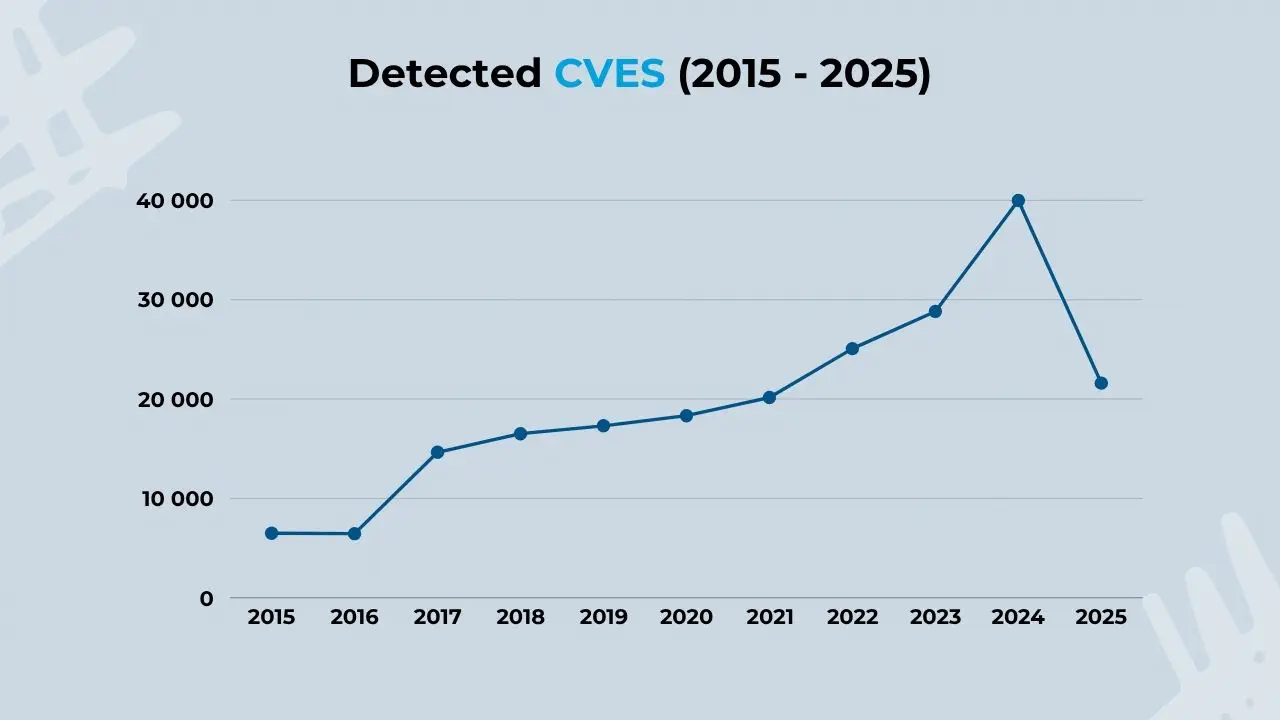
As of today (mid-2025), 21,599 vulnerabilities remain unaddressed. Clearly, the trend is on the rise compared to the previous year, with a total of 39,980 detections, according to CVE.ICO, or 52,000, according to Statista.
As indicated by sources like YesWeHack, the situation is concerning, as a comparison of these data to those from 2016 reveals a 560% increase in vulnerabilities in less than a decade.
Sources like CVE.ICU have documented the number of detected vulnerabilities year after year. Below, we provide the results of the last 10 years:
- 2015: 6,494 new vulnerabilities.
- 2016: 6,449 new vulnerabilities.
- 2017: 14,642 new vulnerabilities.
- 2018: 16,510 new vulnerabilities.
- 2019: 17,305 new vulnerabilities.
- 2020: 18,322 new vulnerabilities.
- 2021: 20,150 new vulnerabilities.
- 2022: 25,074 new vulnerabilities.
- 2023: 28,818 new vulnerabilities.
- 2024: 39,980 new vulnerabilities.
- 2025*: 21,599 new vulnerabilities.
(*partial data until June)
Only half of the critical vulnerabilities detected in 2024 were resolved during that same year
As shown by the graphic from the previous point, 2024 marked a historic high in the number of detected CVEs. However, not all these vulnerabilities were patched during the same year. According to the Verizon 2025 Data Breach report, only 54% of the vulnerabilities detected during that year were resolved. The result was an increase in the number of data breaches, and consequently, significant losses for companies.
20% of security breaches occur due to already known vulnerabilities
As we have already mentioned, an average of 25,000 new vulnerabilities appear each year, but does this mean that those already detected pose no problem? Unfortunately, this is not the case.
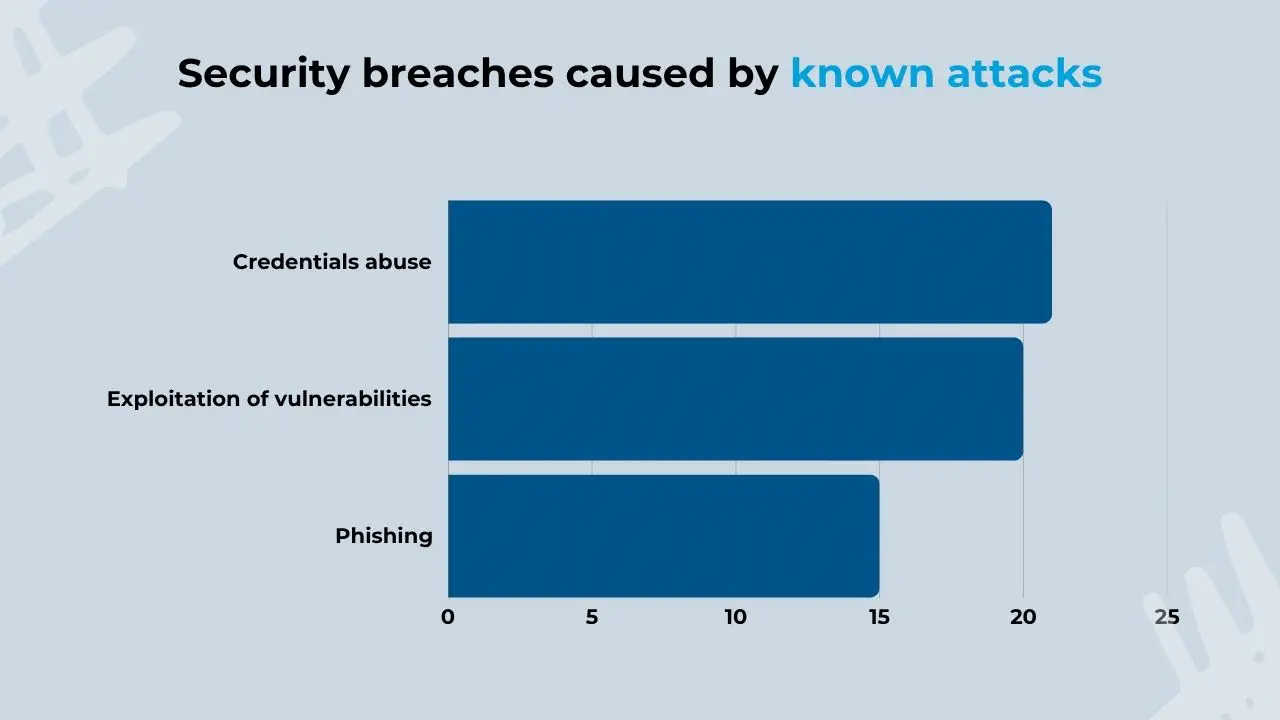
A recent study by Verizon reveals that 20% of the security breaches detected in 2024 were the result of an already known vulnerability. This data underscores the importance of having a vulnerability management solution.
32% of cyberattacks start with an unpatched vulnerability
Cyberattacks, such as ransomware, have increased drastically over the past year. In fact, by 2024, the number of companies dedicated to recovering their encrypted assets had multiplied by five. However, that’s not all; as noted by Sophos in its report, “The State of Ransomware,” 32% of cyberattacks begin with a vulnerability that has not yet been patched.
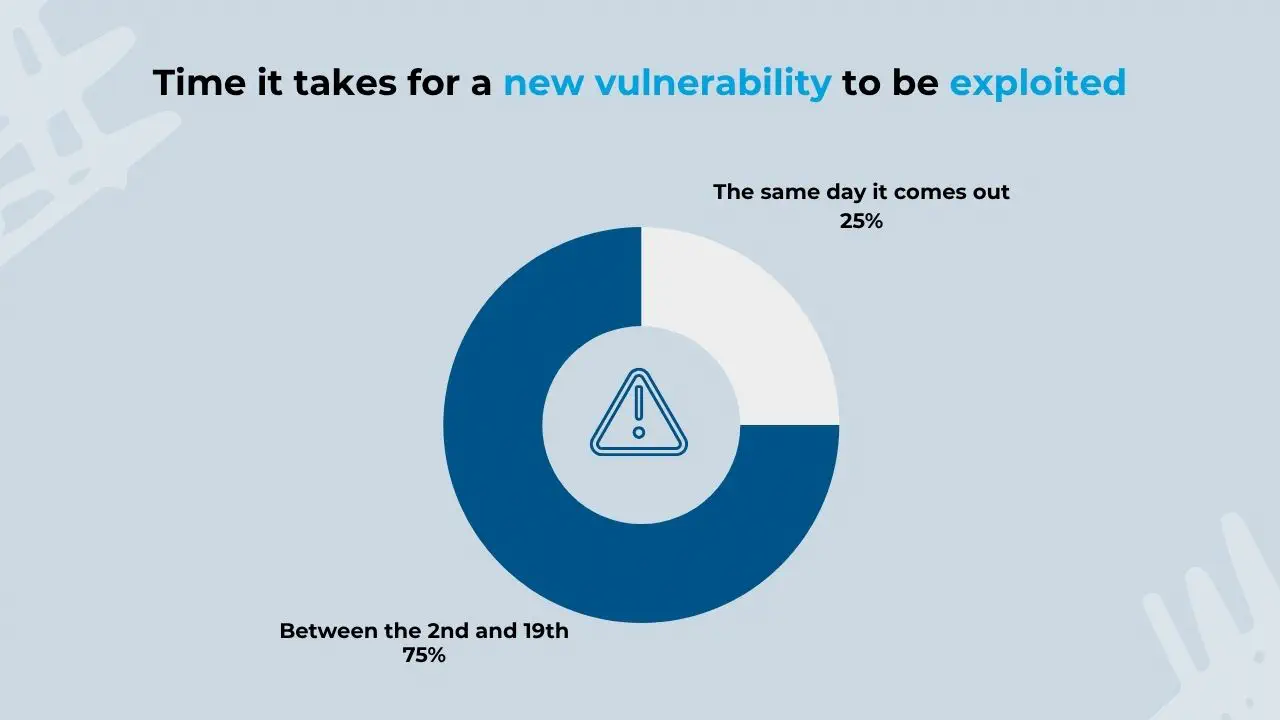
25% of new vulnerabilities are exploited on the same day they appear
The previous points convey a clear message: it is vital for a company to respond as quickly as possible to any vulnerability. A recent study by Turfin emphasizes this fact, indicating that 1 in 4 is exploited on the same day it appears, and the remaining 75% within the first 19 days.
ROI of Vulnerability Management (2025)
Adopting vulnerability management software represents a significant investment for any company, but it can provide substantial benefits both financially and in maintaining business operations. Below, we will present the most important data on the return on investment (ROI) from adopting a vulnerability management platform.
A vulnerability management platform generates a return on investment of 6:1
According to a recent study conducted by CrowdStrike, implementing a vulnerability management platform like CrowdStrike Falcon XDR produces a return on investment of $6 for every $1 spent in just 5 months. This translates to a 600% ROI.
A vulnerability management software can reduce a company’s annual expenses by up to 25.5%.
A recent study published by Cornell University shows that companies that have implemented a risk-based vulnerability management system reduce their annual expenses by up to 25.5%. What difference does this make compared to the traditional system of identifying vulnerabilities by technical severity (CVSS)? We will discuss this in the trends section on vulnerability management.
Trends and Adoption of Vulnerability Management
In a landscape where vulnerabilities and attack vectors are constantly evolving, it is no surprise that cybersecurity prevention systems are experiencing continuous changes. In this section, we will review the main trends in vulnerability management for 2025.
Shift from technical severity-based prioritization to risk-based prioritization
As indicated by the data gathered in this article, 2024 is considered the worst year in terms of CVEs to date. Of the nearly 40,000 vulnerabilities detected that year, only 2% were exploited during the same period. Nevertheless, the Cloud Security Alliance notes that these new vulnerabilities have led to a 180% increase in security breaches to date. Why? Poor management of these vulnerabilities.
One of the biggest trends in vulnerability management to date is that it is no longer sufficient to classify these threats by technical severity (CVSS), but it is necessary to base it on risk. This will help identify the odds of an exploit as well as the impacts on a business, creating critical patches for companies instead of focusing on those with less destructive effects.
Increase in vulnerability monitoring
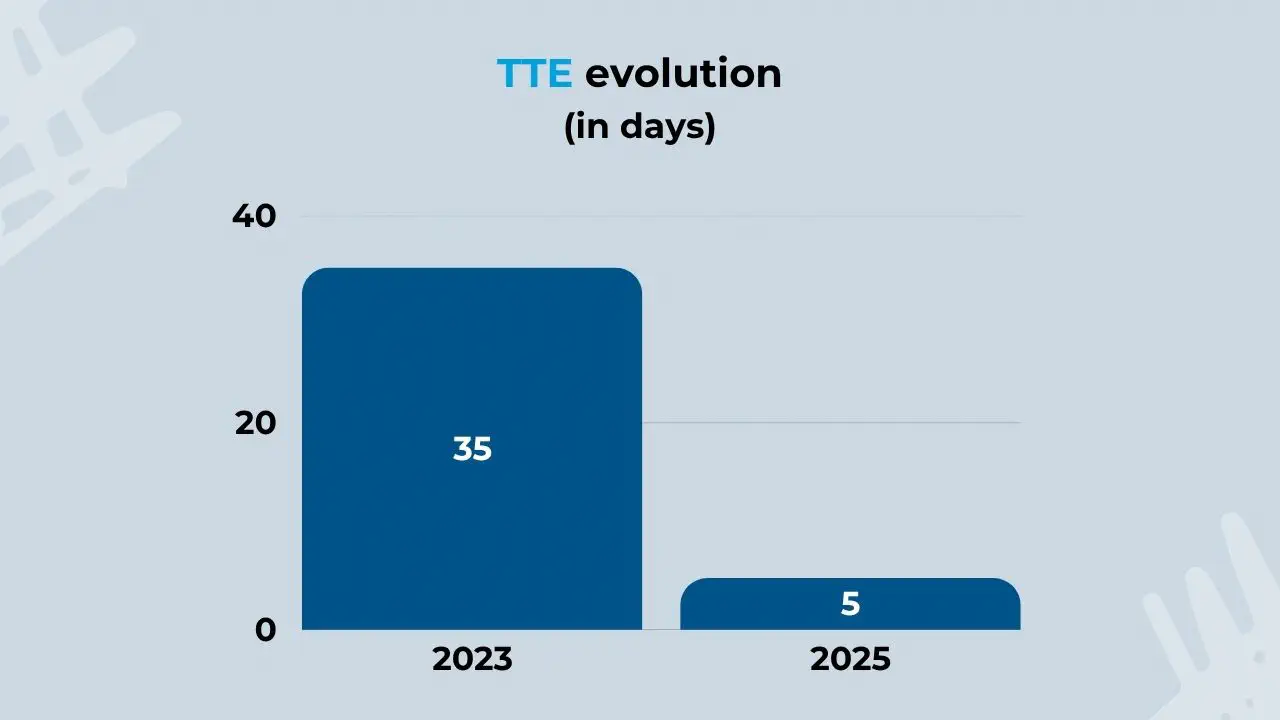
The number of scans for vulnerabilities has increased exponentially in the last 3 years. In fact, investment in evaluating a business’s vulnerabilities has doubled, rising from 13% in 2023 to 26% in 2024. Regular quarterly scans have been replaced with continuous monitoring. This is due to the reduction of TTE, or Time-to-Exploit, which is the average time it takes for a hacker to exploit a vulnerability and conduct a cyberattack. This has decreased from 32 days in 2022 to just 5 in 2025.
Use of automation, Artificial Intelligence, and DevSecOps methodology
According to a recent report by CrowdStrike, 79% of the threats detected in 2024 are not linked to any type of malware, meaning they are fileless or malware-free. This type of attack is difficult for humans to detect efficiently, especially when it appears in large volumes. Therefore, nowadays, most vulnerability management platforms choose to combine automation with Artificial Intelligence and Machine Learning. This enables proactive defense of a business, allowing for the management of a large number of alerts and the automation of patch verification.
The same applies to the adoption of the DevSecOps methodology. According to Veritis, a company that has implemented an advanced DevSecOps will reduce its vulnerability by up to 20%. This is closely related to the previous point, as 80% of these initiatives include automated vulnerability scanning, thereby reducing manual workload and human error.
90% of companies plan to invest in vulnerability management
The significant increase in the number of vulnerabilities experienced in 2024 has serious repercussions at the corporate level. The rise in losses derived from CVEs has led to 9 out of 10 SMEs planning to invest in vulnerability management during 2025.
Conclusion
Adopting a vulnerability management system has become a business necessity for 2025. With over 52,000 vulnerabilities detected in 2024 alone, and 25% of them being exploited within 24 hours, the situation is concerning. However, new studies and advancements in both automation and Artificial Intelligence have changed the approach to addressing these risks. Although still in a state of limited adoption, 90% of SMEs are expected to consider adopting a risk management system by 2025. Is your company among them?